Most people know I LOVE NATURE in all her glory. From the whipping winds to the warming rays of the sun to the thunder and lightening, everything works together (well, when we humans aren’t busy screwing it up). Anyway, here we are almost mid August and I’ve made enough excuses for not doing as much garden maintenance as I would normally do; not enough weeding, not enough spring clean-up, not enough watering, not enough planting, not enough thinning… you get the idea. I can try to blame it on a cold, wet spring, or suddenly too, too hot (over 100deg. F), or too many migraines, or too much else demanding my attention (often the animals) but, in reality, I think I just plain didn’t feel like it. I did do some late fall and early, early spring seed planting, but that’s about it. Well, except for the bindweed I’ve been trying to keep under control for many, many years; I couldn’t ignore that; what is it — like 1,000 seeds per bloom or something equally ridiculous? “Was gonna” throw wildflower seed just after last frost but that happened so late this year, I didn’t get around to that either. The pond fish are fine, but I did no moving, re-arranging rocks or waterfall edges this year. The larger gardens’ straw walk paths are mostly overgrown or have become fertilizer. The deck side bank stairway is completely overgrown — some gorgeous golden alexander decided to sprout there this year, and the New England aster, mist flower, and stiff goldenrod have joined in. Click on any image to open a larger version in a new tab.
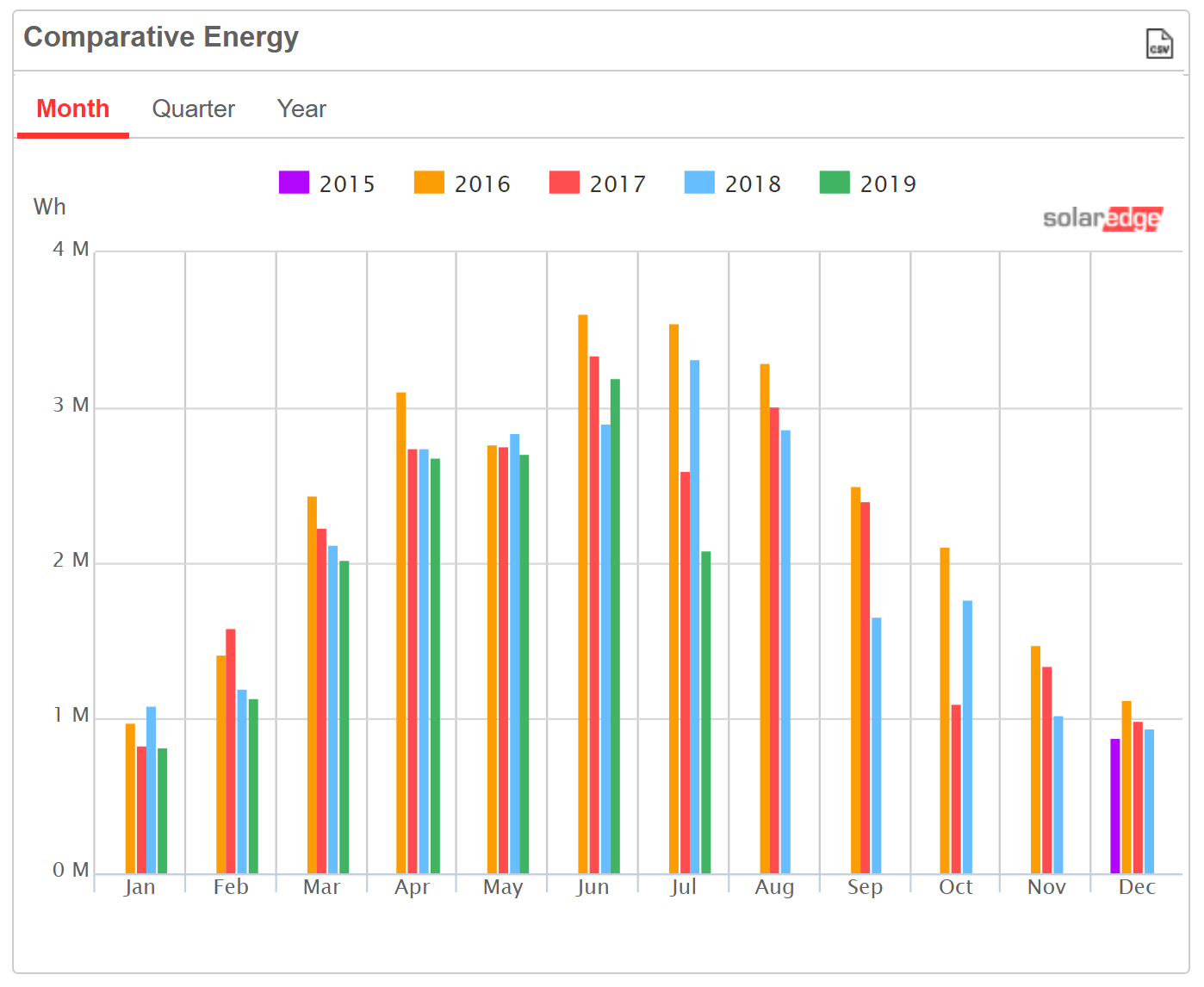
Solar production has been down, too. Much cloudy and rain or too very hot (the panels aren’t as efficient at extreme heat). You can almost see the effects of climate change before your eyes! There should be a gradual decline in production as the system ages and the panels become a bit less efficient every year. I believe the dramatic differences we see between some of our years has been the result of weather phenomena caused by ongoing climate change. One of the optimizers went out a couple few weeks ago. It was replaced today, so maybe that will make a difference in August. It is very dependent on the weather though. I think installation began November, 2015. Time required in between some steps for inspection before the next step could begin. Take into account delays for weather, missing parts or workers, the usual stuff when dealing with contractors and inspectors, and add to that the utility you’re trying to tie into and its inspections, approvals, paperwork requirements and whatnot. I thought it fairly reasonable. We went live with production early December, 2015.
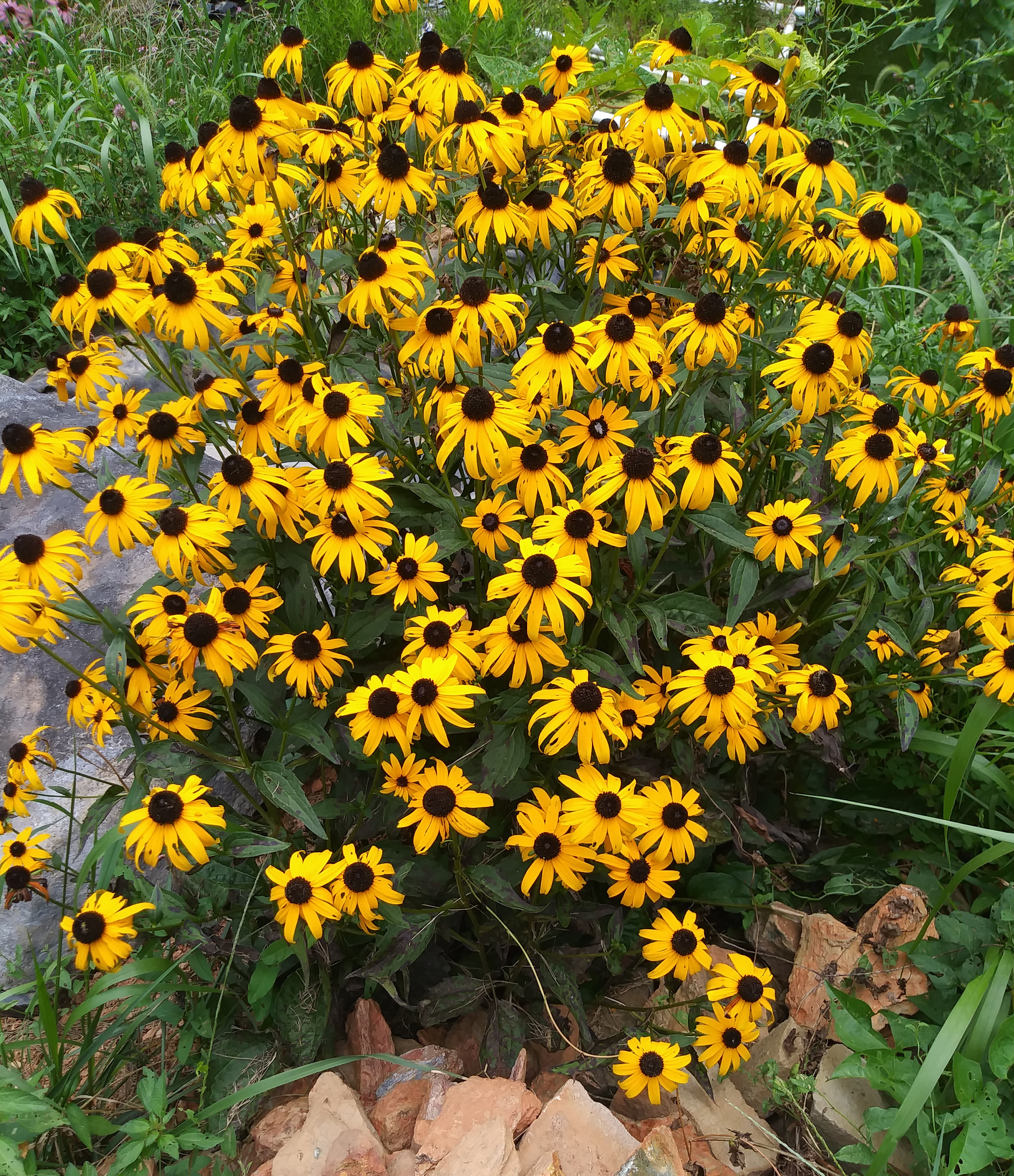
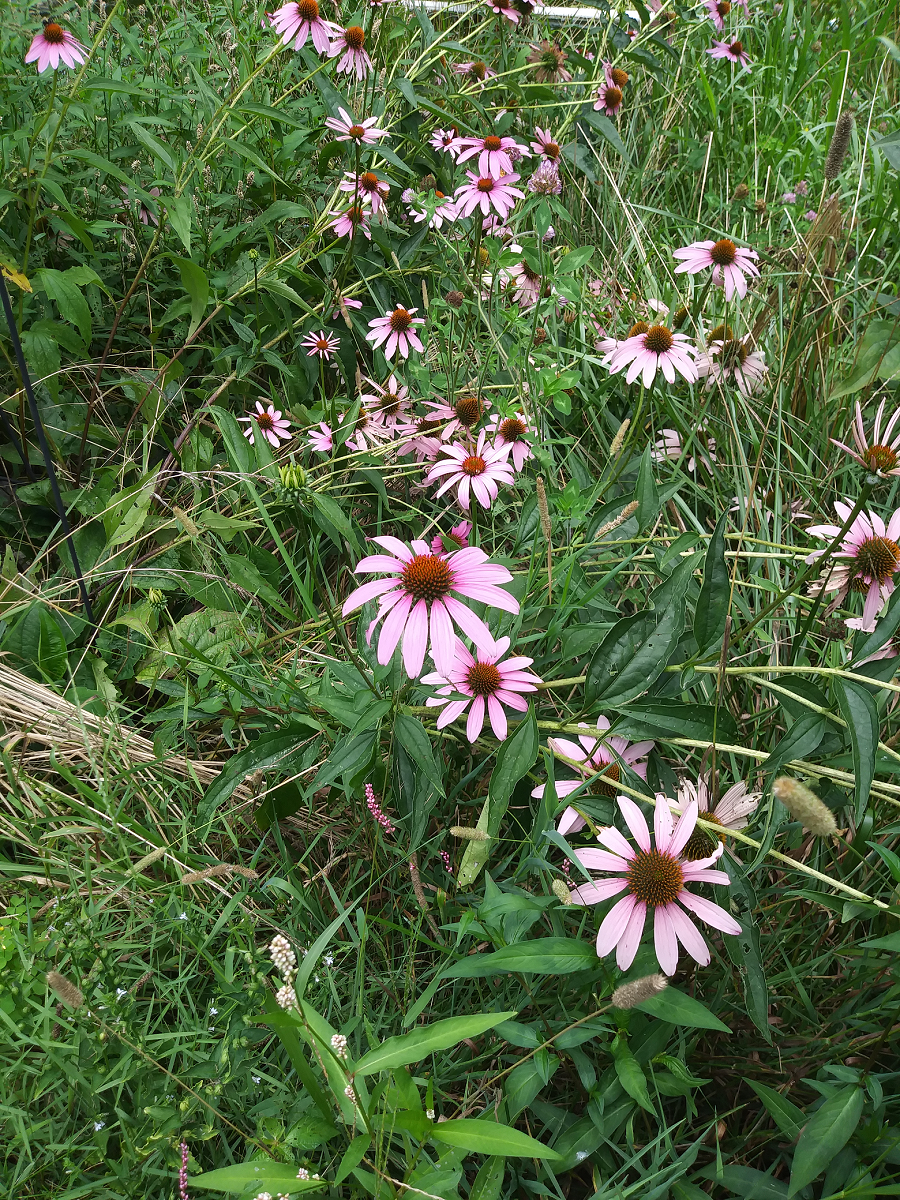
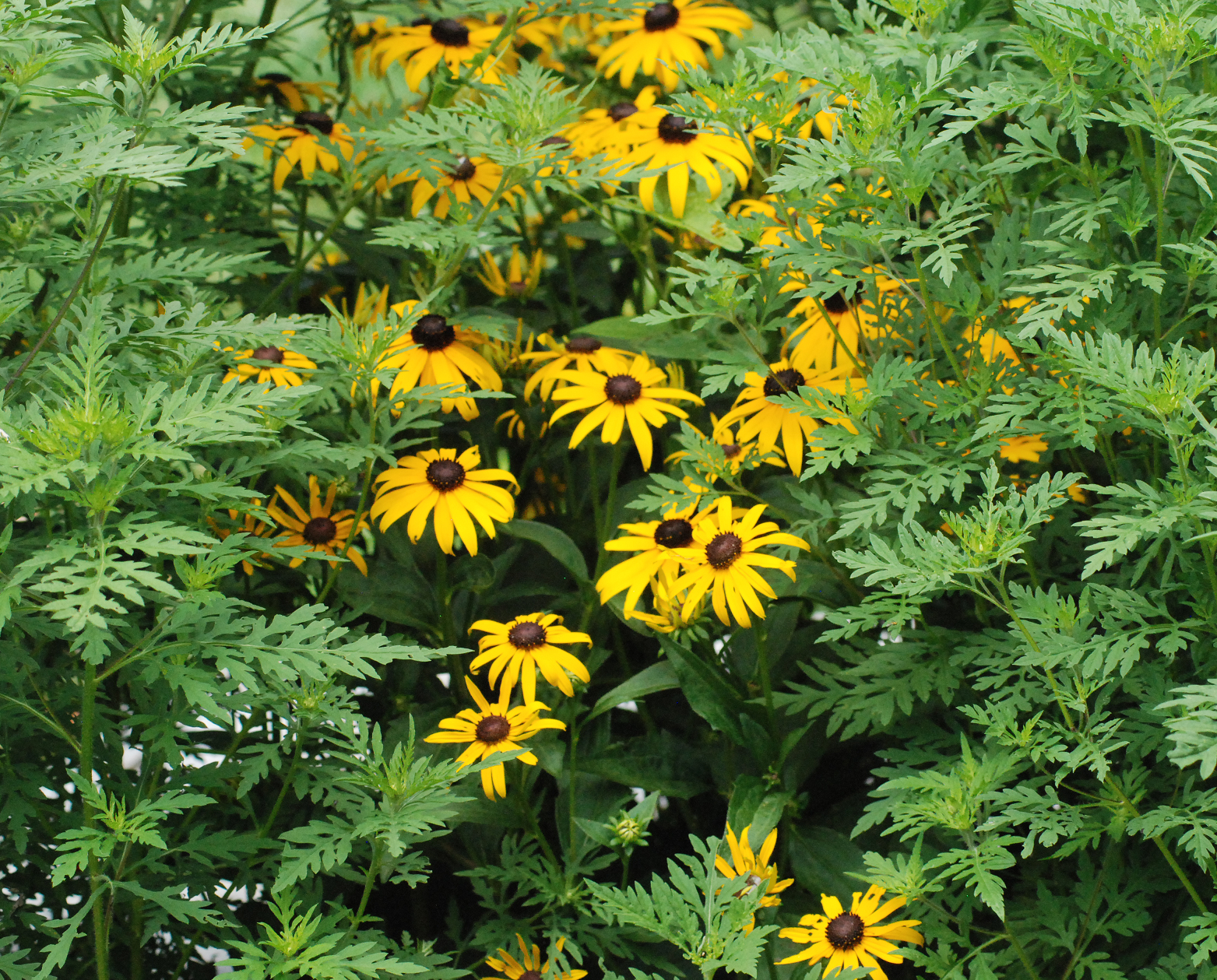
The black and the brown eyed susans are habitat for many small insects the hummers seem to find tasty and the garden spiders really love. I’m fairly sure those little insects are bat food, too! Numerous smaller butterflies and moths nectar on the black eyed susans. The purple coneflowers were covered in bees and various butterflies for weeks. Some of the early bloomers are beginning to go to seed, judging by the occasional American goldfinch I see on them. Some are just now coming into bloom (yes, that’s a good thing; we want nectar and habitat throughout the seasons). This recently taken image of black eyed Susan is in the same location as the initial image on this page, which was taken in 2014. That lovely “lace-y, fern-like” greenery is actually young ragweed. A little less comes up each year, with constant annual weeding. I’ve learned a lot over the years we’ve been native, non-toxic gardening. I will remove any of that noxious weed I see this year too. It makes everyone sneeze because its’ pollen is air borne.
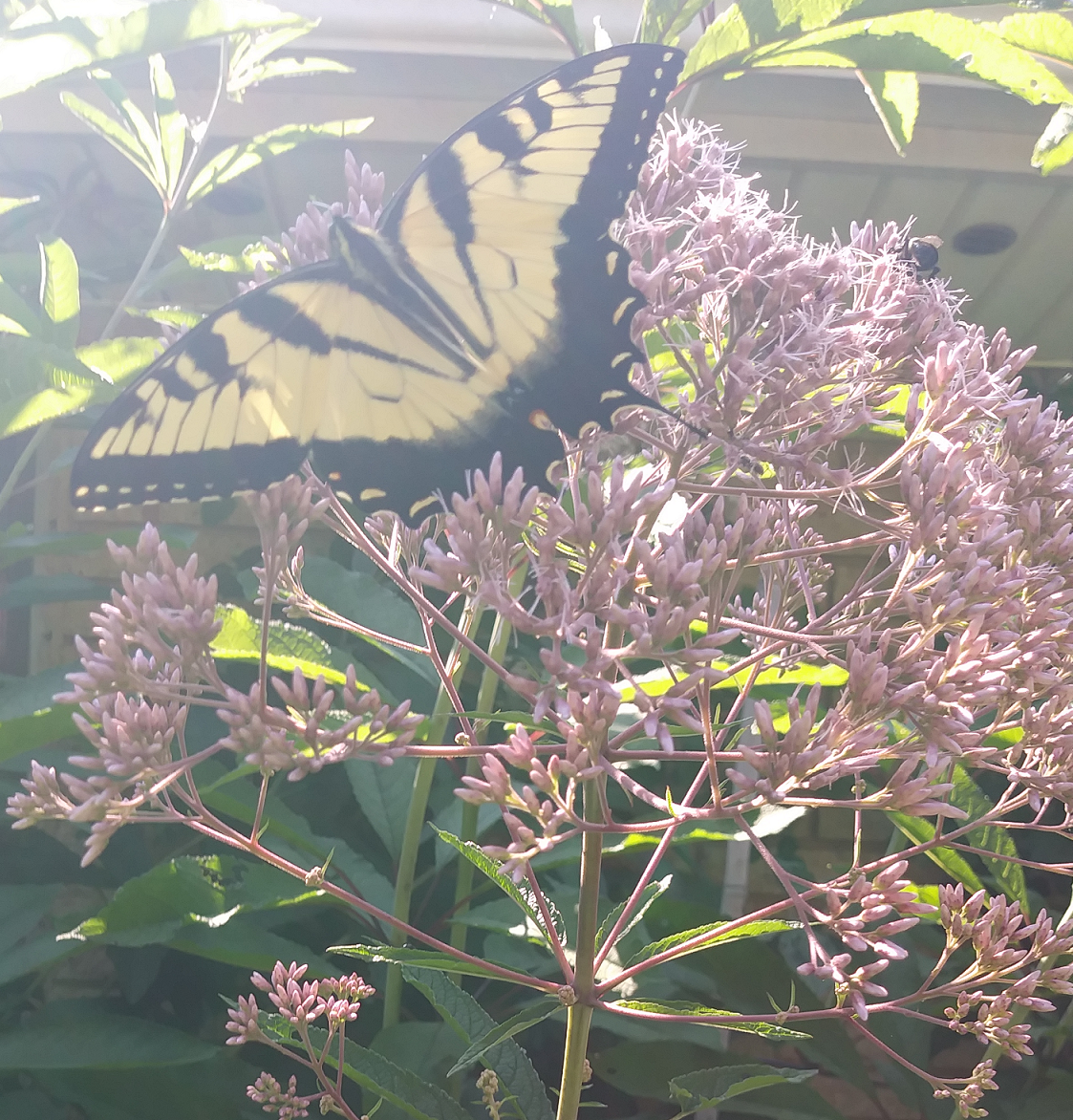
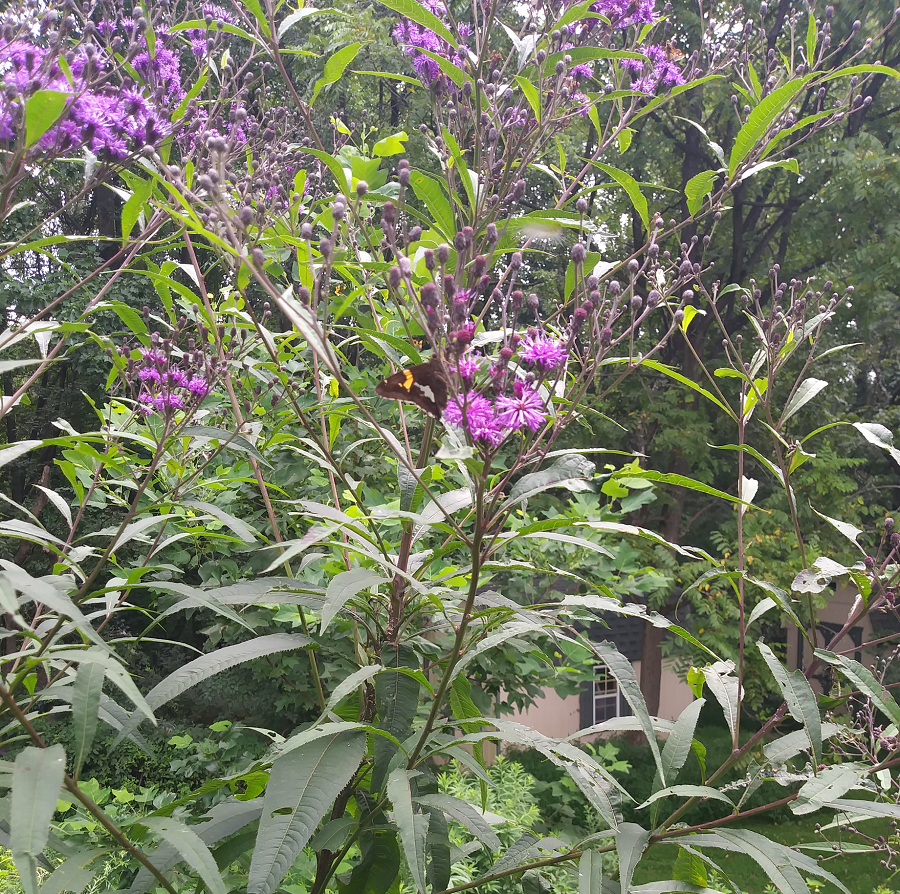
The Joe Pye weed, dwarf and common, is just beginning to bloom, and several varieties of goldenrod look about ready too. Look at the height of that Joe Pye; it’s over the soffit! The “dwarf” version is 2-4ft. tall. The New York iron weed blossoms are just about to open, I think. A few butterflies and bees keep trying it out. Some of the milkweed is yet to bloom, but some of it has produced seed pods. Most of the dogbane is producing seed pods, too. There was much less dogbane this year from the damage from the root eating larvae of the beetles last year. There were also many fewer dogbane beetles and dogbane tussock moths this year. As far as I can tell, dogbane is impossible to actually kill, but severely damaging its’ root system slows it down for a while. There are small patches where dogbane has spread beyond its intended borders anyway, so my “theory” is to let them stay until their intended area recovers. Without the large number of tussock moths, I have noticed fewer yellow jackets (carnivorous wasps) too. Isn’t nature grand?!
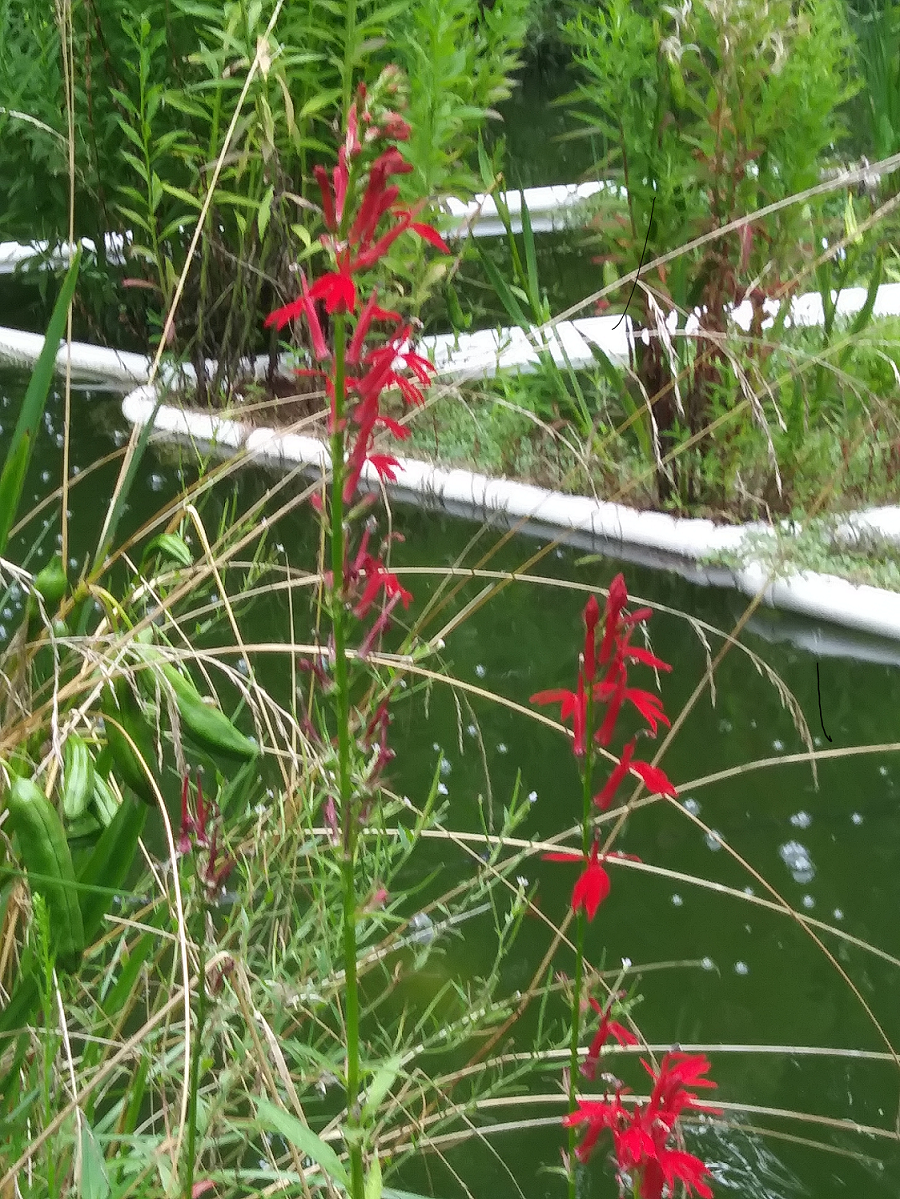
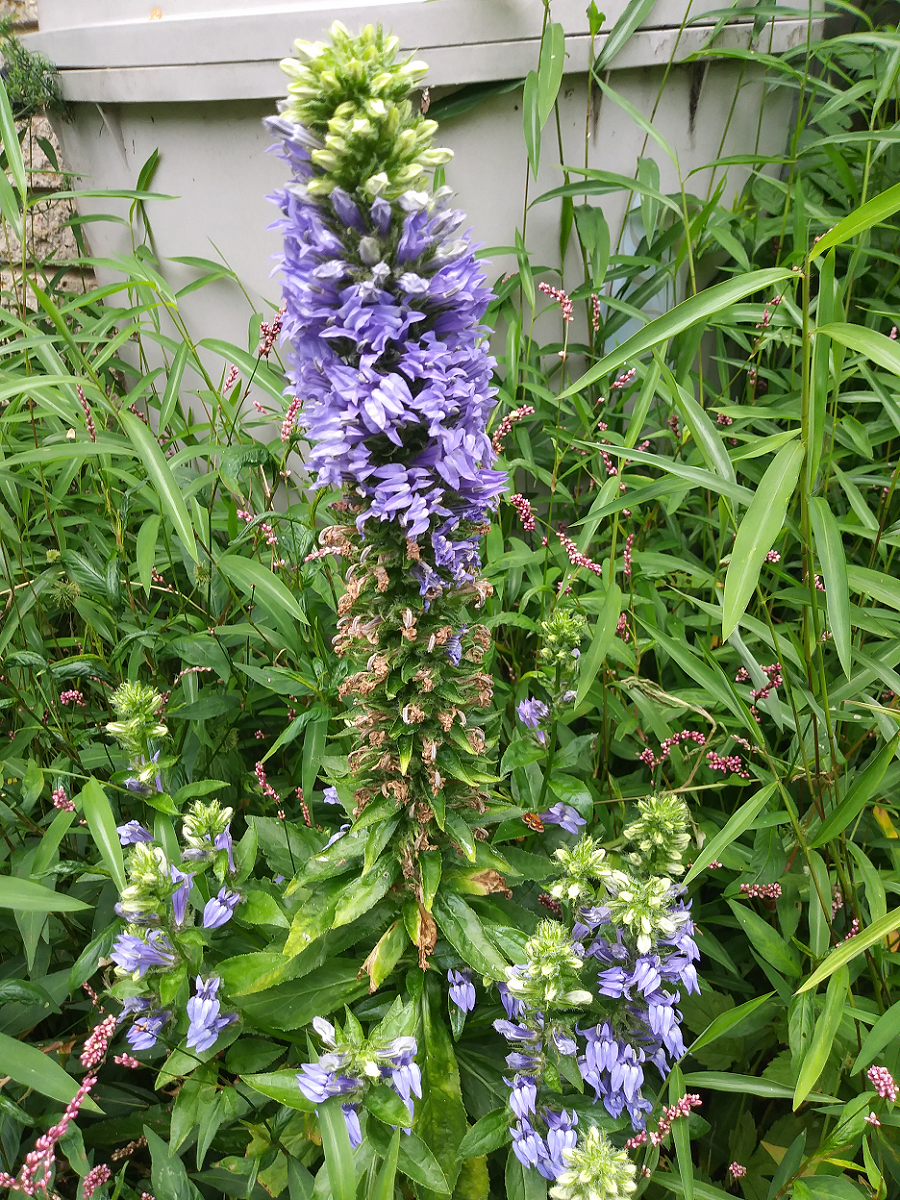
The Pennsylvania pinkweed is struggling to overcome the “bamboo grass”. I don’t know what the stuff is actually called (Asian stilt grass, maybe?); I know it’s easy to pull up (very shallow roots), spreads like wildfire in parched wood, and is not native to here. It is everywhere in the yard; it came with the house. I planted the native pinkweed because I know it is native, spreads rapidly, and is fairly tenacious itself. I’ve seen those tiny blue-green flies hovering about pinkweed patches, but I think more for cover than food or breeding. Lots of those tiny insects are also in the stilt grass. The blue false indigo has already gone to pods and they’ve ripened. I will probably leave that for the birds and natural expansion of the plant. Seedlings are fairly easy to transplant when young. I just need to actually *do* it! There are a couple tulip poplar seedlings that also need transplanting; several evergreen seedlings in the front round butterfly garden I want to move up to the western property line (to fill in where we removed so much giant honeysuckle); and much berry bushes where I don’t want them but the deer love them. This is blackberry, black raspberry, and non-native wine berry. The extension agent I asked about many of the invasives that were here agreed that the wine berry does not belong BUT he raved about the wine berry (pie? jam?) something his spouse made. With its hairy, prickly leaves and stems in addition to thorns, even the deer don’t eat it. Deer apparently do like our native sumac though. We bought deer repellent citrus blocks to try to protect the sumac and the common milkweed from hungry deer. I have no idea why deer would eat milkweed. I have read it is toxic to hoofed animals (so should not be allowed to spread to grazing lands). The citrus blocks have helped a lot.
All this is to say the gardens seem to be doing fine! They don’t appear as neat and tidy, but nature doesn’t seem to mind one bit. I have seen more native wildlife than previous years. Now this just happens to be our eighth year of residence here, so five or six or maybe seven years of gradual environmental changes (hopefully for the better). IF I had done all that I would normally have done, would the results be the same? I don’t know, but taking a year mostly off from manual labor has given me a chance to appreciate the hard work already invested. I will try to make a “Part Two of Magnificent Nature”, with additional images soon.
**This is a publicly visible post. You must be logged in to rate or comment. (0 votes, average: 0.00 out of 5)
You need to be a registered member to rate this.
 Loading...